Bioactive Peptides VS GLP-1s
“Are these peptides you’re talking about GLP-1s, and if not, what’s the difference?”
I got this question in my DMs recently and I thought it was a great one, and if the same question has crossed your mind too, let’s talk about it. 🙂
Before I dive in, let me start by saying that I am not trying to pick fights or pass judgement on anyone who has done GLP-1 injections. I know a lot of gals who desperately want the weight loss results but they are concerned about the side effects and cost, and don’t want to go on medication, but don’t know what else to do.
For that reason, I think you should know that there is an alternative, and I want to help bring clarity to how they work, and why!
Okay, the short answer is: GLP-1 injection weight loss drugs, known as therapeutic peptides, and bioactive peptides are not even in the same stratosphere.
But before we dive into why that is, let’s back up real quick and define what a peptide is.
A peptide is a string of amino acids - in a very particular sequence - that are a coded message for your cells. Peptides are messenger molecules that carry instructions from one cell to another. Example: A muscle cell receives messages through peptide-activated pathways (like mTOR) to trigger protein synthesis or maintain muscle.
Other cells (macrophages) receive the instruction to reduce TNF-alpha production (an inflammatory cytokine), and mute atrophy genes and chronic inflammation scripts - translation: reduce inflammation, and improve recovery and healing.
Peptides carry different messages, depending on the combination and sequence of the amino acids found in that particular peptide.
Peptides are actually naturally-occuring in nature and inside the body. Research has identified natural peptide structures in plant and yeast-based sources. In our bodies, they are a “language” that our body recognizes and understands. Our bodies have specific transport systems (peptide transporters) to deliver ingested peptides into cells…because we are designed to absorb them!
The big differences between synthetic, therapeutic peptides and natural, bioactive peptides is in HOW they’re made, as well as WHAT they’re designed to do.
How Synthetic Peptides Are Made
There are natural peptides, and there are synthetic peptides, and the difference is more than just where they come from. It’s in how they behave in the body, how they’re made, how safe they are long term, and whether they support your body’s intelligence or override it.
Therapeutic peptides are synthetically made, meaning they are not sourced from nature. They are artificially constructed in a lab using harsh chemicals and resins.
Steps include:
Binding amino acids to a plastic resin bead
Blocking and unblocking reactions to control sequence
Using activators, solvents, and coupling agents like piperidine, FMOC, HBTU
Final step: Cleaving the peptide from the resin, then purifying it
Concerns with This Process:
Involves toxic or carcinogenic compounds (many listed as respiratory, CNS, or organ hazards)
Often lacks natural peptide structure or folding, leading to less stability and higher risk
May require caps, coatings, or additives to survive the body
Creates molecules that are long-acting (7-day half-lives vs. 2-minute natural half-lives)
To me, even though they claim that the chemicals used in the process are not in the end-product, the use of carcinogens and endocrine disruptors is highly concerning, and a pretty big risk.
Natural peptides are:
Functional messengers (not passive nutrients)
Rapidly broken down by enzymes (called peptidases and proteases) as a built-in safety mechanism
Delivered in nature with cofactors and a surrounding matrix that protects them and supports absorption
HOW synthetic peptides work
As for HOW they work, they are flooding the body with imitation GLP-1 (glucagon-like peptide), slowing down digestion and gastric emptying, and forcing your hunger’s “off switch”. A synthetic peptide with a 7-day half-life, taken weekly, builds up exponentially (1000 mg becomes 1500 mg the next week, 1750 mg the week after, etc.). This overrides the body’s own signaling systems, especially appetite or muscle-related functions.
It creates a negative feedback loop over time, and the result is suppressed natural peptide production, gut paralysis, muscle loss (sarcopenia), long-term dysregulation. Not to mention a long list of other side effects that have become quite common, one of the most concerning is losing enjoyment of food, losing desire to eat, and desire to thrive.
The Risk of “Overriding” vs. Supporting the Body
A synthetic peptide with a 7-day half-life, taken weekly, builds up exponentially (1000 mg becomes 1500 mg the next week, 1750 mg the week after, etc.).
This overrides the body’s own signaling systems, especially appetite or muscle-related functions.
Result: Suppressed natural peptide production, gut paralysis, muscle loss (sarcopenia), long-term dysregulation.
Real-world studies are showing that for every 10 pounds of weight loss, 4-5 pounds of that is coming from MUSCLE.
When you lose muscle, you essentially erase your metabolic engine, because healthy muscle is the driver of your metabolism and calorie burning.
Studies also showed that upon stopping the medication, the rebound weight gain was sometimes up to 130%, meaning regaining all the weight plus more, and the majority of this weight gain in the form of body fat.
This is obviously a very distressing outcome for those who have been desperate to lose weight!
This is largely due to losing metabolic function when you lose your healthy muscle.
The difference between GLP-1s and Bioactive Peptides
LEAN vs. GLP-1s
LEAN Peptide = Naturally derived peptides + polyphenols (plant nutrients)
Supports healthy hunger signals via healthy communication in your gut/brain axis
Improves fat metabolism (breakdown and burning of body fat)
Enhances gut health via microbiome shifts
Preserves and protects muscle tissue from breakdown
Does not override, suppress, or replace natural body function
GLP-1 Agonists = Synthetic injectable drugs
Force hunger off switch
Suppress normal gut motility
Must be carefully managed under medical supervision
MAKE’s peptides are:
Naturally sourced
Orally bioavailable
Designed for sustainable, supportive action
Backed by clinical research and clean ingredient standards
If you have struggled with your weight for years and have been feeling desperate, like a GLP-1 is your only option, I completely understand! That’s why I’m so glad that I can show you another option - a safer, more natural option that doesn’t carry the side effects, the needles, the prescriptions, or the expense that the synthetic ones do.
AND they are delivering life-changing results to thousands of people.
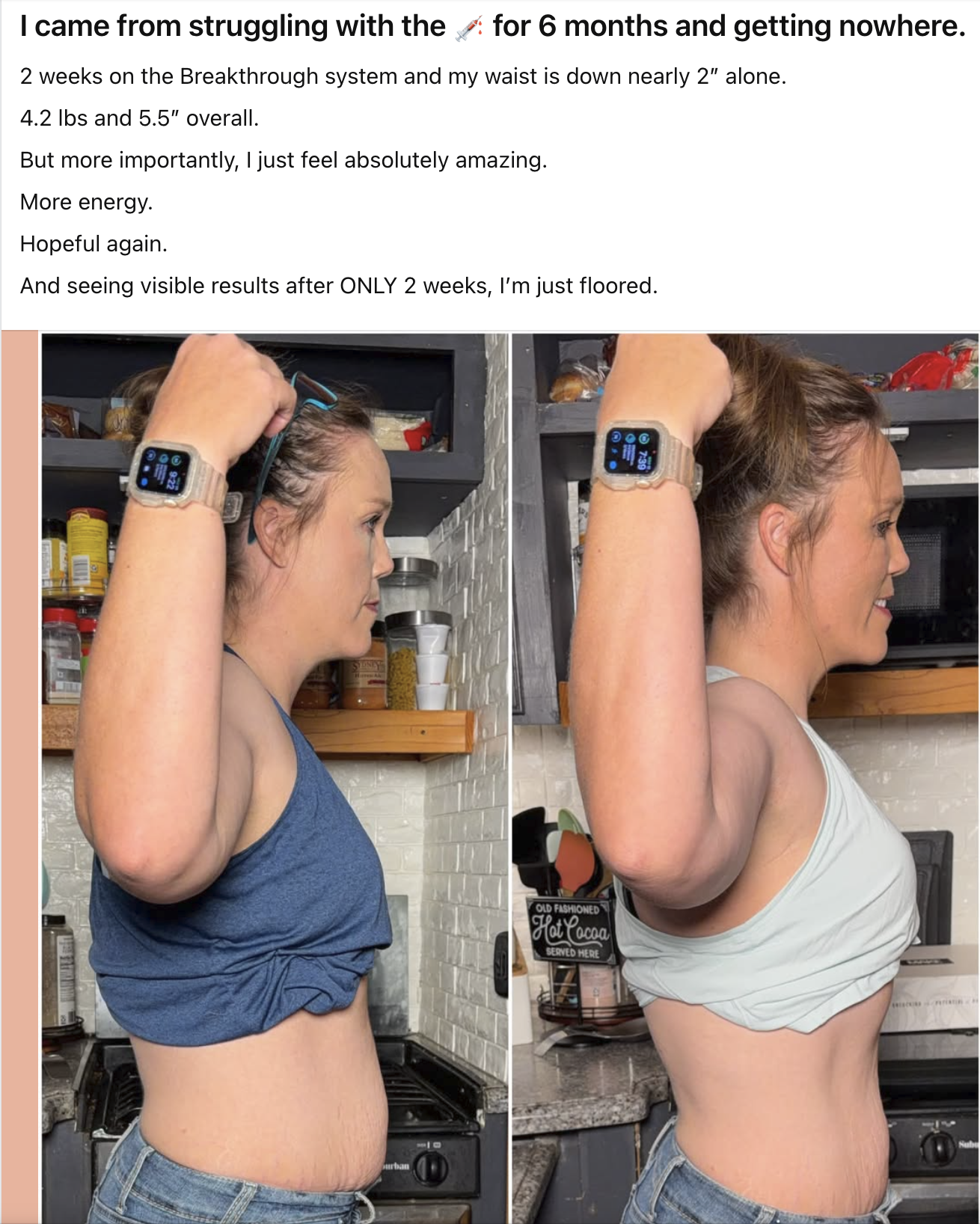
Where to start with bioactive peptides?
My general recommendation for most people with a fat loss goal will be the M3 Breakthrough Stack which is not only a powerhouse combo for supporting your fat loss and fitness at every level, but also a huge savings with the bundle of 3 peptides for the price of 2. Check it out HERE and use my code GIVE10 for an extra $10 off your first month.
If you aren’t quite sure what’s best for you and you want a personal recommendation from me, take this 1 minute QUIZ to find out what your perfect peptide would be.
If you are on - or have been on - a GLP-1
If you have taken, or are currently taking a GLP-1 medication, no judgement or shame! I know that losing weight can be life changing, and getting rid of excess body fat can greatly improve your health (metabolic health), and I love that for you….but what we don’t want is you getting rid of all your LEAN MUSCLE too.
If you are on or have been on a GLP-1, please do all you can to maintain or rebuild your muscle. You can do that by ensuring you eat enough protein (100-150g a day), resistance training, and hydrating well.
Consider starting this custom stack from MAKE Wellness - GLP-1 SUPPORT STACK - to make sure your body is getting the signals it needs to build and maintain your muscle and metabolic health. This can protect you from sarcopenia and rebound weight gain.
I hope this has been helpful! Let me know if you have any questions.
Email [email protected]